Pages

Showing posts with label inspiration. Show all posts

Monday, 2 May 2016

Charlwood Design on Instagram

Charlwood Design has finally jumped onto Instagram! 


You will now be able to keep up to date with project releases, news, staff insights, inspiration, event information, manufacturing processes, job offers and more via our Instagram. The whole purpose is to provide you with a bit of an insight into the Charlwood Design studio, by showing you what we do, what we like and who we are.

Search Charlwood Design on Instagram or follow this link to go to our page. And be sure to follow us to keep to up to date with everything!

Sunday, 31 August 2014

Kickstarter record broken, $13.3 million raised

Who would have thought a seemingly simple Cooler (or Esky to us Aussies) would raise over $13 million (USD) in funding, garner the attention of over 60,000 contributors, millions of onlookers, and cause industrial designers and backyard inventors alike to start salivating at the thought of achieving such success?


The Coolest is the Brainchild of Ryan Grepper, a serial inventor who ran a campaign through the popular crowd funding website, Kickstarter. The Coolest features a blender for mixing cocktails, a water proof bluetooth speaker (looks to be a Jawbone Jambox), USB charging output, plus many more clever additions that help it stand out in a seemingly simple and rather boring market.


Kickstarter, for those unaware, is a global crowd funding website for projects- which include consumer products, films, music, stage shows, comics, journalism, video games, and food-related projects. Everyday people can develop a campaign based on their project, and other everyday people can pledge money towards it in an effort to see it funded. Each pledge is rewarded depending on the amount, whether it be a limited edition t-shirt or receiving one of the first products off the assembly line. It is a great opportunity for people with great ideas but limited cash flow to see there projects come to life.

Amazingly, this isn't the first time Grepper has tried to fund the Coolest, running an unsuccessful campaign late 2013. With his confidence low, Grepper went back to the drawing board and re-jigged the design, gathered more supporters, adjusted the date of the campaign (July instead of November), and set the funding goal lower- from $125,000 down to just $50,000. Withing 36 hours of beginning the second campaign, that $50,000 goal was smashed, and people kept contributing right until the end- with over $2 million raised in the final 24 hours. The final figure was $13,285,226 from a total of 62,642 backers, and now Grepper has the arduous task of finalizing the design and sourcing manufacturers.

Even more amazingly, is that this record is predicted to be broken before too long. Kickstarter has seen incredible growth since its founding in April 2009- at the height of the GFC- and has proved itself as a viable alternative to the more traditonal funding avenues that faltered during that period- banks, investors and venture capitalists. Last year, donors funded an average of $1.3 million (USD) per day, and as of last quarter funded an average of three projects each hour- with a dozen of those breaking the $1 million mark.

This is promising news for those of us with an idea we want to see come alive- whether you are a Director of a small startup, backyard inventor or a group of mates who have had that lightbulb moment. However, despite its instant appeal, you don't read much about the unsuccessful campaigns- which there are many.

There are a few factors that can contribute to an unsuccessful campaign- poor idea, poor design, poor marketing, poor timing, limited target demographic or perhaps an existing similar product on the market.

Engaging an Industrial Designer at the beginning is a crucial make or break step, and can help to eliminate the above factors. Industrial Designers can help grow an idea into a product that appeals to the masses, and then develop it into a visual or functioning prototype- something that Kickstarter requires of all Product Design campaigns. Once funded, Industrial Designers will help to further develop the product to a mass production stage and help source local or international suppliers and manufacturers.

Additionally, a great product that no one knows about is also not going to achieve success. Kickstarter features thousands of different projects, so spreading the word is crucial to stand out. Campaign runners need to find the right marketing avenues be it blogs, local newspapers, friends or family. Finding your key demographic and targeting them is another aspect of the campaign in which an Industrial Design firm can greatly help. Simply relying on the exposure of being on Kickstarter will most likely lead to one thing- getting lost in the crowd.

Whilst it should be in no means considered easy money, crowd funding certainly has its benefits. With 21 years experience, Charlwood Design can guide you and help you achieve the most out of your idea and turn it into reality. Now all you need is that $13 million dollar idea!

Monday, 19 May 2014

Sir Jack Brabham dies, aged 88.

Sir Jack Brabham, a three-time Formula One world drivers' champion and an icon in the motorsport and engineering world has passed away, aged 88.


Brabham was truly inspirational, being the only person to build, design and engineer their own car and go on to win a world championship- something that had never be achieved, and will most likely never be done again.

He won the world titles in 1959, 1960 and 1966- paving the way for drivers such as Alan Jones, Mark Webber and Daniel Ricciardo, and proving that Australian drivers were a force to be reckoned with in top level motorsport.

Upon retirement in 1970, Brabham became the first motorsport identity to be knighted, receiving the honour in 1978.

In 2006, Brabham participated in the 2006 Commonwealth Games Baton Relay- mounting the Queens Baton to his F1 winning BT19 race car and completing a lap around the Albert Part circuit.


He will be remembered as icon in Australian sport, as well an example of what can be achieved with a little Aussie ingenuity, persistence and hard work.

Sunday, 24 November 2013

Charlwood Design Tumblr


The team at Charlwood Design have recently begun our own Tumblr. We will be treating the Tumblr as sort of a mood board for the studio, featuring designs from many different disciplines that inspire and intrigue us. Whether it be the iconic Braun SK 61 by Dieter Rams and Hans Gugelot, or a students latest work that we spotted on Behance or Coroflot- if we like it, we will post it up! Feel free to follow along.

charlwooddesign.tumblr.com

Monday, 5 August 2013

Uppercup - Charlwood design client launches Crowdfunding campaign


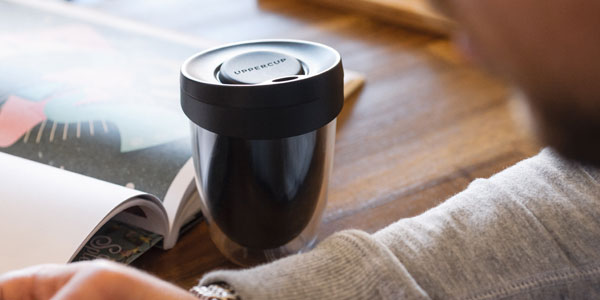
'Uppercup' - a sustainable, reusable takeaway coffee cup designed by Charlwood Design has just been launched on the crowdfunding site pozible.
The unique, double wall tumbler is made of Tritan plastic and is ultrasonically welded. The result is a BPA free design that not only insulates the cup but also doesn’t absorb odours and flavours and is fully recyclable. The sturdy plastic construction ensures it is not fragile like ceramic or glass.

The unique rotating lid can be turned to reveal a tilt-up spout and then resealed flat to prevent splashes. The PP and LDPE parts separate for easy cleaning and recycling at the end of life.

Designed and manufactured in Melbourne Australia the cup is available in white/black in two sizes - 8oz and 12oz. The campaign ends on 19th September 2013 so get your pledges in to be the first to receive one.

www.pozible.com/uppercup

www.uppercup.com.au

Thursday, 21 March 2013

Ideas that could change your life - Charlwood Design's concept for a better future for Melbourne


Charlwood Design's Director, Paul Charlwood was recently featured in an article in The Age Melbourne Magazine showcasing innovative design research for the future of Melbourne.

What is it? Commonwealth Avenue - a conceptual design for Kings Way that would create a shared transport route for trams, cars, bikes and pedestrians and incorporate water and solar energy collection.
Who's doing it? Charlwood Design - who created the 2006 Melbourne Commonwealth Games Queen's baton - came up with the concept as an internal exercise to try and add beauty and function to a major traffic feeder into the city. The team wanted to bring different modes of transport - bicycles, cars, trams and pedestrians - together in a sustainable way. "It's a reflection of Dandenong Road and the avenue down there," says Paul Charlwood. "I always loved the old overhead tram poles that are Victorian structures in their own right." The joint carriageway would be better than Copenhagen-style lanes "that are an afterthought", he says. "Kings Way is crying out for something to be done and this could be a great example - making a feature out of the overhead tram poles so they are more elegant and then the water and solar collection are the sustainability side. They could feed down to street plantings or parks nearby."
Could it work? With government backing, Charlwood believes construction could start within a couple of years. "It's already starting to look more logical and contemporary. As we start to swing out of the GFC," he says, "sustainability issues will come back onto the agenda."


Wednesday, 15 August 2012

Insight from Richard Seymour - Seymour Powell

Some of Charlwood Design's team had the pleasure of meeting Richard Seymour, founder of leading UK industrial design consultancy Seymour Powell a few years ago when he spoke at the AGIdeas conference.

He was recently asked on what he thinks the big game-changers will be in industrial design in the next two to five years. His thoughts were really insightful:

“There’s a storm coming. The design world as we know it is separating into the Polymaths and the Guilds. The Polymaths are the broad-bandwidth thinkers who can see across cultural and technical boundaries to find meaning in new future combinations…and the Guilds, the specialist capabilities that can facilitate those ideas once they have been envisioned.
The designer as we know it is already an endangered species. What is a service and what is a product in the 21st Century is up for grabs. Where does the Product end and the Metaproduct begin? How many ‘services’ as we know them today are going to have to migrate to ‘this side of the glass’ and articulate themselves through physical metaphors of their virtual self? Is NEST an object, a service or part of a synthetic-aperture radar gathering big data for the highest bidder? I guess it depends who you are and what your agenda is.
The next five years may witness the most important shift in consumption patterns we’ve seen for centuries. Buckle-up Dorothy, you’re going to have to be on your toes. And if you’re going to continue to call yourself a designer, better work out what that means….”

Tuesday, 3 July 2012

World Industrial Design Day

The team at Charlwood celebrated world industrial design day on 29 June by taking part in the DIA - industrial design practice group drinks at Mountain Goat Brewery. The event was a huge success with more than seventy designers and students and a great celebration of the vibrant industrial design community in Melbourne.

Image Courtesy of the DIA Victoria Branch

Sunday, 17 June 2012

This is Your Life Cycle


Exploring life cycle assessment and eco-design for young design students.
Charlwood Design was the first Australian design studio to join the Designers Accord which rallies for the integration of sustainable design principles in all practice and production. Paul Charlwood drew on this model when he established the Design for the Environment Partnership between the Design Institute of Australia , Sustainability Victoria and RMIT’s Centre for Design. This partnership led to the software tool Greenfly to assist designers with eco-design strategies and the environmental impact of their products.

Thursday, 31 May 2012

AGIdeas - Advantage Business Breakfast Insights

Charlwood Design enjoyed some valuable insights from this year's AGIdeas advantage business breakfast.

The focus at this year's event was creating value for your business through design innovation. The work and thoughts of the speakers was incredibly inspiring and highlighted the breadth in which design can have a positive impact on a company's success. We thought we would share a brief summary of some our favorite insights from the event from an industrial designer's perspective.

Göran Roos - a global expert in intellectual capital science, manufacturing innovation and strategy MC'd the event. He set the overarching theme across all the speakers - that design can be a positive contributor to all aspects of a business's operations and success, as long as companies don’t simplify design as styling or art. He stated that the objective of design is to generate and achieve behavioral change; change that is desirable for the user, beneficial to the supplier and positively impacts other stakeholders.

Roos' thoughts on Apple's design objective were interesting, highlighting that they didn't necessarily  invent new technology but rather redesign the delivery of their product so everyone in the "eco system" benefits. Clearly Apple benefits but also the app developer and the telco carrying the data.

Mauro Porcini, Chief Design Officer, 3M echoed this view. He spoke of a new social scenario where consumers today are much more difficult to categorise and understand and this has had resulted in companies, like 3M, needing to fulfill the an emotional desire in the user as well as complete a functional task.
He spoke about the emotional flow in the life of the product that spans 3 phases. The initial visceral relation when viewing the product before purchase, the interactive relationship withe product and the expressive relation - the act of sharing the product and your impression of it with others.

One of our favourite quotes of the day came from Mauro when he said "listen to your customers, but don't believe them..." A great expression of the value of design research, in particular the value of observing how the user interacts with your product and it's features, which is often different to how they would describe it in a design brief. Our team is a firm believer in quality research and often employ ethnographic and participatory design research techniques as part of our design process.

Finally Mauro's definition of "design strategy" was interesting, because it was different to how many conventional companies define it. Design strategy is a business strategy that leverages design. It is not just a consistent look for the brand, but rather a valuable business asset. To achieve this design needs to be ingrained into the culture of the company. Design led companies learn, they adjust but they don’t compromise.

AGideas Business Breakfast Snapshot - Image courtesy of http://www.typ3d.com/


AGIdeas inspiration - Johannes Kuhnen


Charlwood Design's latest team member Dean Benstead was particularly inspired by Australian Silversmith Johannes Kuhnen at this year's AGIdeas event.


Johannes Kuhnen from the Australian National University, Gold and Silver smithing department, spoke passionately about the importance and benefits of materiality in design. Developing jewellery, vessels and spectacles like art forms.  He spoke about his short attention span with one design (laughing), he will only work on a design if there is a great opportunity to improve or develop the function and form.
He uses inspiring traditional techniques for production of such quality and timeless designed pieces. Bending, twisting, cutting and forming, Kuhnen’s design and making process just makes you want to get some metal and head to the workshop.  His constantly evolving spectacle designs show an amazing amount of problem solving, material use and technique. They are like art forms. He spoke about the love of fabricating short runs and not making thousands of his designs. A passion for the bespoke and personality within a product for an individual user.
Manipulating different metals, with chemical treatment, bending techniques and fine fixings are the key to his highly aesthetic pieces. His use of anodised aluminium allows such vibrant colours and designs. This vibrancy in his work is what stands out and highlights the traditional metal smith techniques and materials. His minimalist approach to the spectacle design is seen with arms that are created with one bend, yet highly detailed fine joints and hinges just look amazing. We love the detail (tiny bolts, tension wires, o-rings, amazing hinges and fine lens holders) in the glasses and would love a custom designed pair.

Spectacle Design - Johannes Kuhnen